When people hear “3D printing”, they often think of early prototypes or concept models. While it is excellent for both, our 3D printing capability at Crompton Mouldings goes much further.
We use 3D printing every day to solve real manufacturing problems, improve production accuracy and create functional parts that would otherwise be expensive or time-consuming to manufacture.
From precision jigs and trimming tools to custom components, legacy replacement parts and complete assemblies, 3D printing gives us the flexibility to turn an idea—or even an existing physical part—into a practical finished solution.
3D-Printed Jigs and Tools for Manufacturing
Producing a good-quality moulding is only part of the manufacturing process. Many products still require accurate trimming, drilling, assembly or finishing before they are ready for the customer.
This is where custom 3D-printed jigs and production tools can make a significant difference.
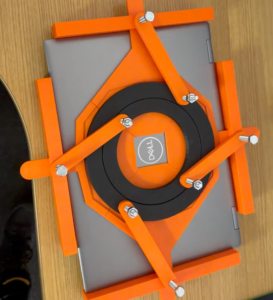
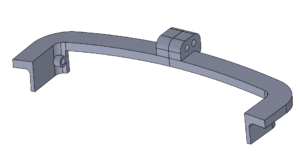
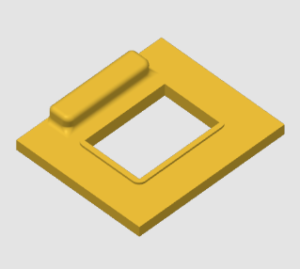
We design and manufacture precise jigs that locate securely against the shape of a component, helping our operators position holes, cuts and additional features consistently. This reduces variation between parts and makes repeatable production much easier.
Examples of the tools we manufacture include:
- Drilling and assembly jigs
- Trimming guides and templates
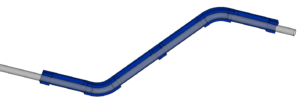
- Tooling ends and collars for trimming equipment
- Location and positioning fixtures
- Inspection aids
- Components used to shape or support finished parts
Because we design and manufacture these tools in-house, they can be tailored to the exact product and production process. They can also be modified quickly when a design changes or when we identify an opportunity to improve the way a part is manufactured.
Functional Parts, Components and Complete Assemblies
Our 3D printing service is not limited to production aids.
We can also manufacture standalone products and functional components, including custom handles, bushes, brackets, housings, protective covers and other specialist parts. Where required, multiple printed components can be combined with fixings, inserts and other manufactured items to create a complete assembly.
For low-volume production or specialist applications, 3D printing can be a practical alternative to conventional manufacturing methods. It can reduce the need for expensive tooling and allow complex parts to be produced with much shorter development times.
It is also particularly useful when a customer needs a one-off component, a small batch of parts or a design that may continue to evolve.
Choosing the Right 3D-Printing Material
The correct material depends on how the finished part will be used.
We work with a wide range of 3D-printing materials, including:
- PLA for accurate models, prototypes and lighter-duty applications
- ABS for tougher and more durable components
- Nylon for strong, wear-resistant engineering parts
- TPU for flexible components, protective features and applications requiring impact resistance
When selecting a material, we consider factors such as strength, flexibility, temperature, wear, loading and the environment in which the part will operate.
This helps ensure that the finished component is not only the correct shape, but also suitable for its intended application.
Reverse Engineering Parts Without Drawings or CAD Data
Not every component comes with a drawing or a digital model.
This is often the case with legacy parts, older machinery, discontinued products or components that have been in service for many years. The original manufacturer may no longer exist, replacement parts may be unavailable, or the drawings may simply have been lost.
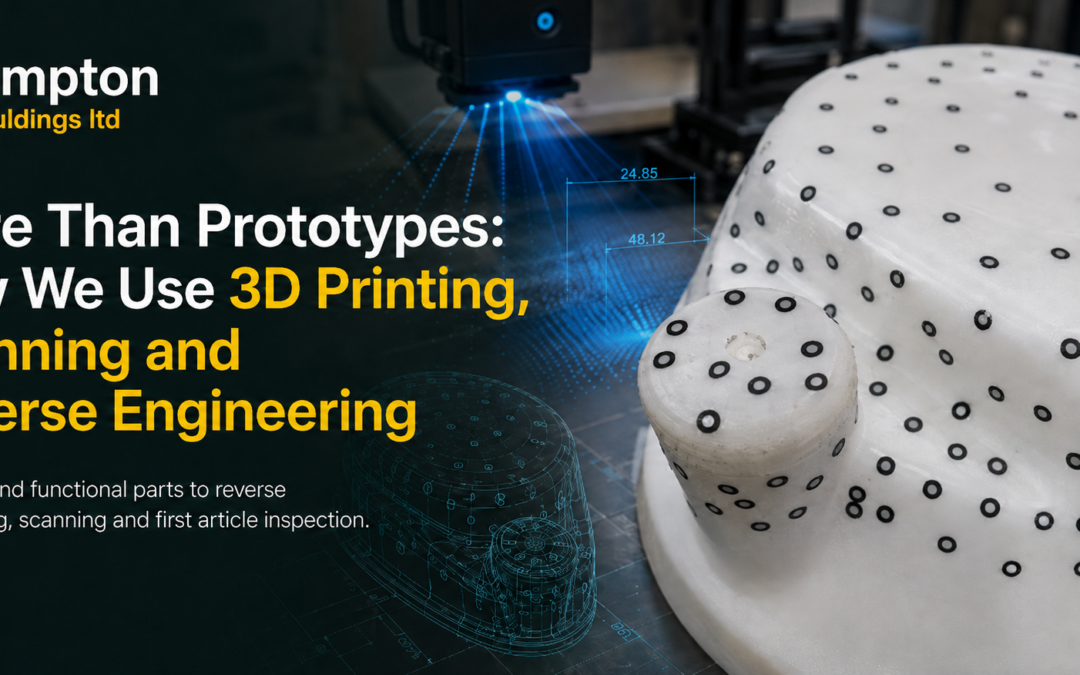
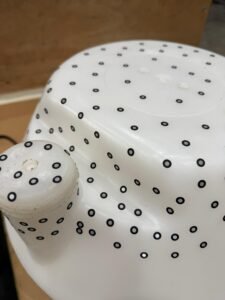
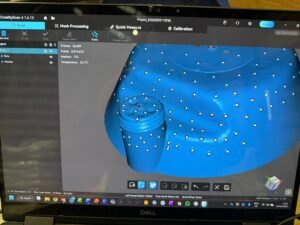
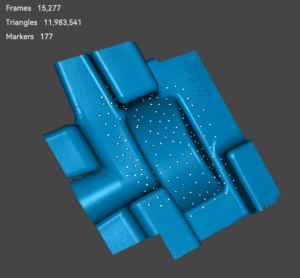
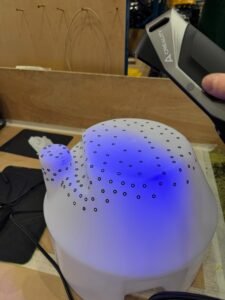
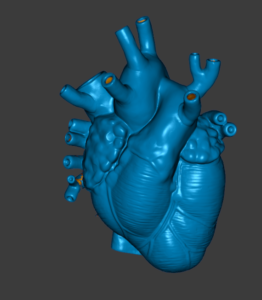
Using our blue-light and infrared 3D scanners, we can capture the detailed geometry of an existing physical component. The scan data can then be processed using advanced CAD software to recreate the part as an accurate digital model.
This allows us to reverse engineer complex components even when no original CAD information is available.
Once the model has been created, we can reproduce the part using 3D printing or use the data to support another suitable manufacturing process. We can also make improvements to the original design, strengthen vulnerable areas or adapt the component for a different application.
First Article Inspection Using 3D Scanning
Our 3D-scanning capability can also be used for first article inspection and dimensional verification.
Complex moulded parts are not always easy to inspect using conventional measuring equipment. Curved surfaces, irregular profiles and detailed geometry can make it difficult to confirm whether a finished component matches the intended design.
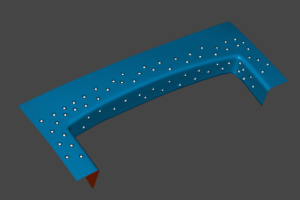
By scanning the manufactured part, we can create an accurate digital representation of its surface. This scan can then be superimposed onto the nominal CAD model.
Comparing the scan data with the original model allows us to identify areas of deviation and confirm whether the part has been manufactured in line with expectations.
This can be particularly useful for:
- First article inspection
- Checking complex geometry
- Verifying profiles and curved surfaces
- Confirming dimensional accuracy
- Identifying localised distortion or shrinkage
- Supporting product approval and process development
The comparison provides a clear visual indication of how closely the manufactured component matches the intended design, helping us make informed decisions before moving into repeat production.
From an Existing Part to a Finished Solution
Combining 3D scanning, reverse engineering, CAD design and 3D printing gives us control over the complete process.
We can begin with an existing physical component, scan its geometry, recreate it digitally, inspect it against a nominal model and manufacture a functional replacement or improved version.
This joined-up approach allows us to support customers with:
- Custom manufacturing jigs and fixtures
- Low-volume 3D-printed components
- Legacy and obsolete replacement parts
- Reverse engineering
- First article inspection
- Dimensional comparison against CAD data
- Product development and design improvement
- Complete printed assemblies
Whether the requirement is for a simple trimming guide, a complex replacement component or a full inspection of a newly manufactured part, our technical team can develop a practical solution around the application.
To discuss a 3D printing, reverse engineering or 3D scanning project, contact Crompton Mouldings and speak with our technical team.