
THE PROCESS
What is Rotational Moulding?
A complete guide to the rotational moulding process — how it works, what it produces, and why it’s the right choice for your product.
How Does Rotational Moulding Work?

ADVANTAGES
Why Choose Rotational Moulding?
Rotational moulding offers a unique combination of design freedom, structural integrity, and cost-effectiveness that makes it the ideal process for a wide range of products.
No Weld Lines or Seams
The rotational moulding process produces seamless, one-piece products with no weld lines — resulting in superior structural integrity.
Cost-Effective Tooling
Tooling costs are significantly lower than injection moulding or blow moulding, making rotomoulding ideal for low to medium volume production.
Design Flexibility
Complex shapes, undercuts, inserts, and varying wall thicknesses are all achievable — giving designers exceptional freedom.
Consistent Wall Thickness
The rotation process ensures even distribution of material, producing consistent wall thickness across the entire product.
Wide Material Range
HDPE, LLDPE, nylon, polypropylene, and many other materials can be processed — each offering different performance characteristics.
Large Product Capability
Rotational moulding can produce very large products — from small containers to tanks holding thousands of litres — in a single piece.
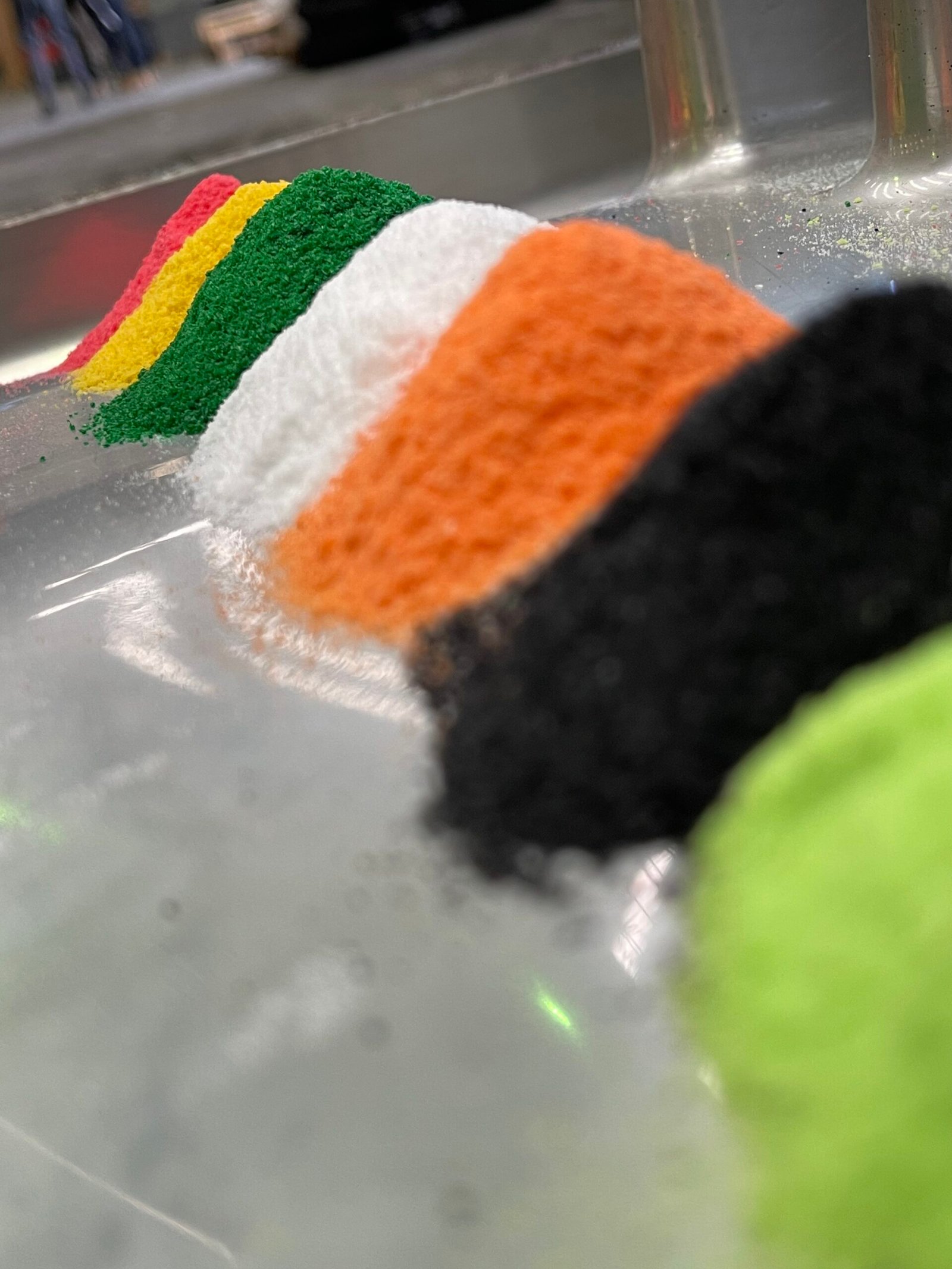
Materials We Work With
At Crompton Mouldings, we work with a wide range of polyethylene (PE) and engineering-grade polymers to suit different industries, environments and product requirements. Material selection varies depending on the application, performance expectations and operating conditions of the finished product.
LLDPE (Linear Low-Density Polyethylene)
More flexible than HDPE with excellent impact resistance. Used for products requiring flexibility or complex shapes.
HDPE (High-Density Polyethylene)
The most commonly used rotomoulding material. Excellent chemical resistance, UV stability, and impact strength. Ideal for tanks, containers, and outdoor products.
Polypropylene
Good chemical resistance and high-temperature performance. Used for chemical storage and process equipment.
Nylon (Polyamide)
High strength, excellent wear resistance, and good chemical resistance. Used for demanding industrial applications.
OUR PROCESS
From Concept to Delivery

1. Consultation & Design

2. Tool Manufacture